Lotus Leaf Microstructure and Self-Cleaning Paint
Last updated on 2026-08-21 by PHYLLO Rangers
The lotus effect
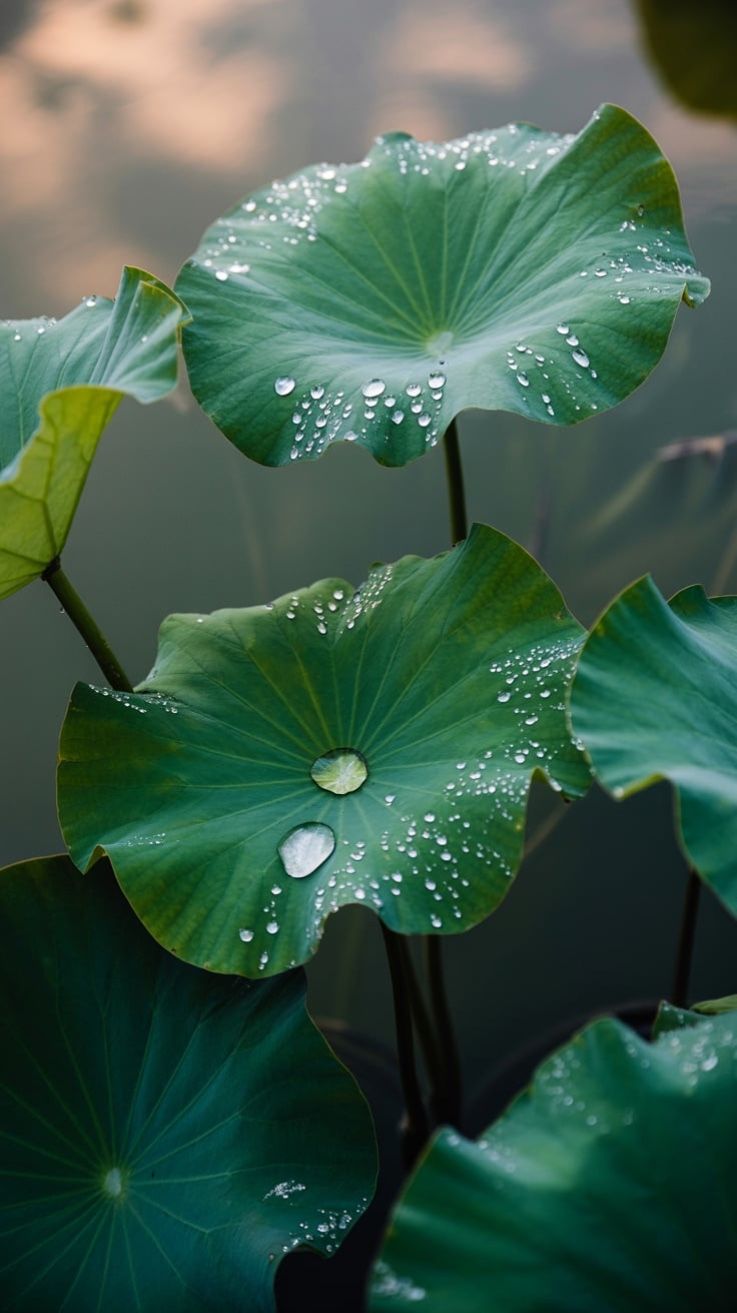
The lotus leaf is covered with bumps 10–20 µm tall, each coated in wax crystals. Water beads up at contact angles above 160° and rolls off, carrying dirt with it. A façade paint based on this structure reached the market in 1999.
From the 1970s, botanist Wilhelm Barthlott examined around 10,000 plant surfaces under the electron microscope. In 1997 he described why lotus leaves stay clean and named it the lotus effect.
Bumps and wax
The bumps sit 10–15 µm apart and carry wax crystals about 1 µm across. A droplet touches only the tips, so just 2–3% of its base meets the leaf.
Into building paint
Paint that combines micro-rough particles with water-repellent binders lets rain wash the wall. The same idea later moved to glass, textiles and solar-panel coatings.
Reference:
Barthlott, W., & Neinhuis, C. (1997). Purity of the sacred lotus, or escape from contamination in biological surfaces. Planta, 202, 1–8.